Hiratsuka no Tsuka (平塚の塚)
 |
| Hiratsuka no Tsuka |
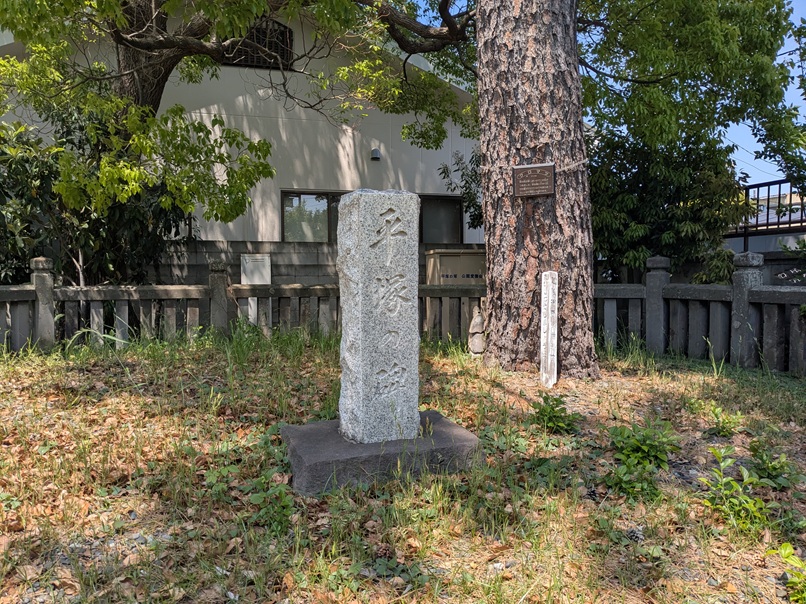 |
| Stone monument engraved "平塚の碑" |
Located about a 20-minute walk west of Hiratsuka Station in the Hiratsuka area of Hiratsuka, Kanagawa Prefecture, is a small park called Hiratsuka no Tsuka Ryokuchi (平塚の塚緑地). Within the park is a small mound, about a meter high, surrounded by an octagonal stone fence. Inside the fence are a stone monument engraved with the words "平塚の碑" (Hiratsuka no Hi), literally "Hiratsuka Monument," erected in 1973, and a pine tree. This mound, known as Hiratsuka no Tsuka (平塚の塚), is said to be the origin of the city's name, Hiratsuka.

The large stone monument beside Hiratsuka no Tsuka was erected in 1920 by Tadakazu Ariyoshi, who was governor of Kanagawa Prefecture at the time. The title inscription, "平塚碑" (Hiratsuka-hi), was written by Yorimichi Tokugawa, who served as a member of the House of Peers. The smaller stone monument was erected in 1956 by Sadao Togawa, then mayor of Hiratsuka, to commemorate the 1,100th anniversary of Masako's death. The pine tree standing today is said to be the third-generation pine tree at the site.




Comments
Post a Comment